Recipes That Survived a Partition: How Sindhi Families in America Are Keeping Their Food Heritage Alive
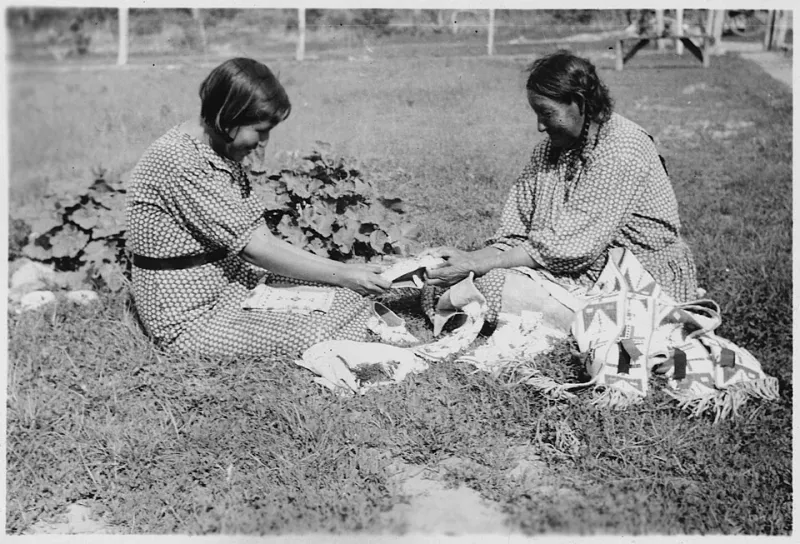
Photo: Unknown authorUnknown author or not provided, Public domain, via Wikimedia Commons
There's a small notebook — spiral-bound, its cover stained with turmeric — that Priya Mirchandani keeps in the top drawer of her kitchen in Edison, New Jersey. The handwriting inside belongs to her grandmother, who fled Sindh in 1947 with almost nothing except the clothes on her back and, apparently, a deeply encoded memory of how to make sai bhaji. "She couldn't bring her home," Priya says, stirring a pot on a Sunday afternoon, "but she brought every recipe she ever knew, right here." She taps her temple.
For millions of Sindhi Hindus, the 1947 Partition of British India wasn't just a political event. It was a total uprooting — a forced departure from a land, a culture, and a cuisine that had developed over thousands of years along the banks of the Indus River. Unlike other displaced communities, Sindhis had no single resettlement state carved out for them. They scattered: to Mumbai, to Pune, to Singapore, to Hong Kong, and eventually, to the United States. And wherever they went, they cooked.
A Community Without a Homeland, Defined by Its Table
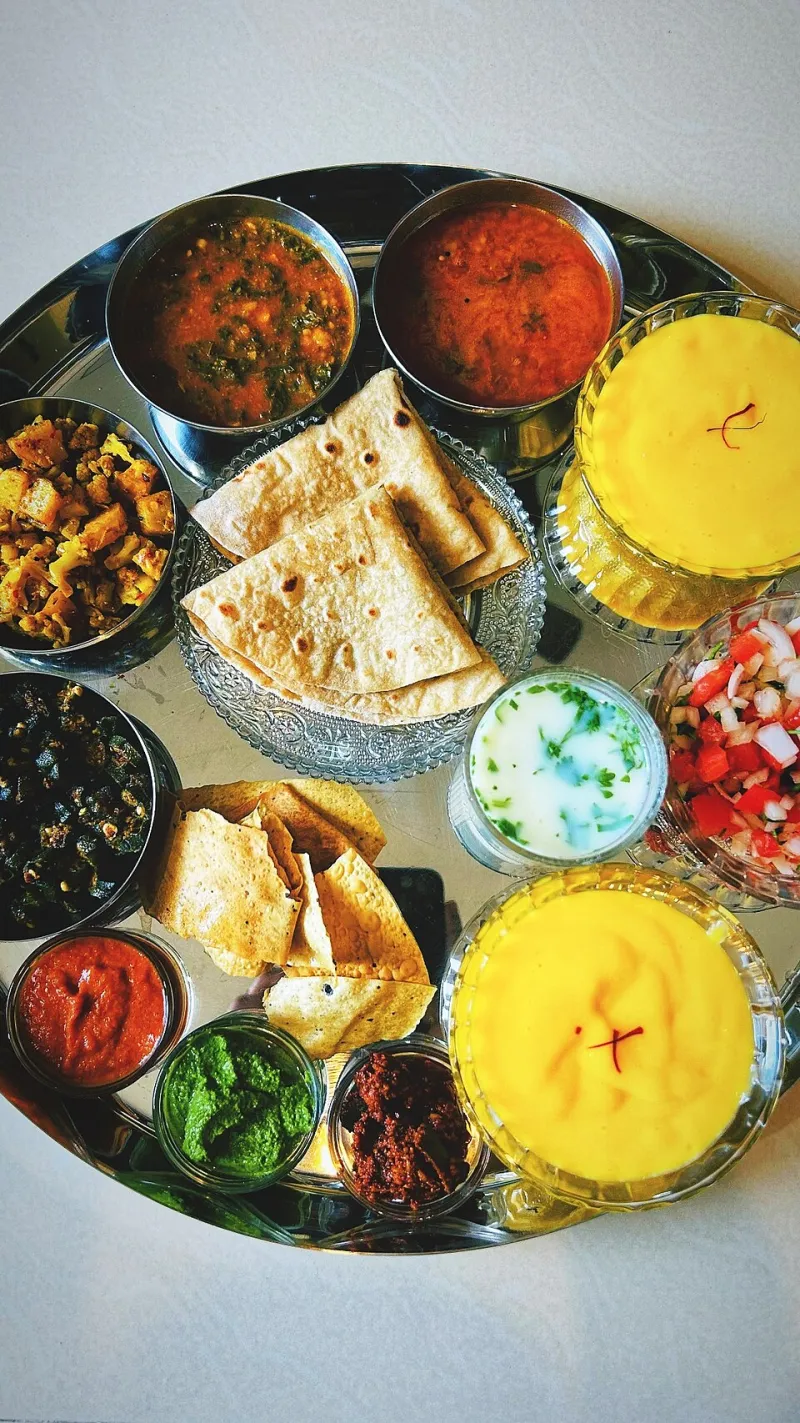
Sindh — the region that now sits in modern-day Pakistan — gave the world a cuisine that is simultaneously bold and subtle. Think of the tart, tamarind-laced sweetness of koki flatbread, the slow-cooked earthiness of seyal murgh, or the cooling simplicity of kadhi chawal on a weeknight. These aren't dishes you'll find on most American menus. You won't stumble across them at a random Indian restaurant in Chicago or Houston. That near-invisibility is precisely why Sindhi home cooks in the US have had to work so hard to keep these recipes alive.
"There was no restaurant to go back to," explains Deepak Vaswani, a food historian and second-generation Sindhi-American based in the Bay Area. "If you wanted sai bhaji that tasted the way your mother made it, you had to learn from your mother. There was no other option."
That necessity created something remarkable: a culture of intensely oral, deeply personal recipe transmission. Sindhi cooking was never really written down in the formal sense — no canonical Sindhi cookbook circulated widely until relatively recently. Instead, recipes lived in conversations, in phone calls between daughters and mothers, in handwritten notes tucked into suitcases.
The Handwritten Recipe Book as Sacred Object
Ask a Sindhi-American woman of a certain generation about her recipe collection, and she'll almost certainly produce something handwritten. These aren't polished journals. They're working documents — smeared, annotated, occasionally contradictory. Measurements are approximate. Instructions assume knowledge that was never written down because it was assumed you already had it.
"My mom's recipe for dal pakwan says 'cook the dal until it's done,'" laughs Sunita Khemani, who runs a Sindhi supper club out of her home in Naperville, Illinois. "Done how? Done like what? I called her seventeen times before I got it right."
Those phone calls — those extended, cross-generational cooking conversations — are their own form of cultural transmission. Sunita's supper club, which she started during the pandemic, now draws Sindhi families from across the Chicago suburbs. People come not just to eat but to remember, to compare notes, to argue lovingly about whether a particular dish should have more ajwain or less.
Migration Shaped the Flavors Themselves
Here's something that doesn't always make it into the heritage narrative: Sindhi food in America isn't frozen in 1947. It has evolved, adapted, and absorbed new influences at every stop along the diaspora trail. When Sindhi families settled in Mumbai in the late 1940s and 1950s, they encountered Maharashtrian spices and street food culture. Those who moved to Hong Kong in the 1960s and 70s absorbed Cantonese pantry staples. By the time many families reached the United States, their cooking already carried layers of influence.
In American kitchens, the evolution has continued. Sindhi cooks have discovered that chipotles can approximate a smokiness that's hard to achieve without dried Sindhi red chilies. Some have started using an Instant Pot for the slow-cooked dishes that traditionally required hours over a gas flame. Younger cooks are experimenting with plant-based swaps for ghee without abandoning the fundamental flavor architecture of a dish.
"My grandmother would probably have something to say about my air-fryer kachori," admits Rahul Lalwani, a food content creator in Austin who documents his Sindhi cooking journey on social media. "But she also would have used whatever tools were available to her. That's actually the most Sindhi thing you can do."
Gathering as Preservation
If the handwritten notebook is the archive, the family gathering is the living library. Sindhi communities across the US — in New York, New Jersey, Texas, California, and Illinois — have maintained a strong tradition of communal cooking events, whether organized through temples, cultural associations, or informal neighborhood networks. These gatherings aren't just social occasions. They're active sites of culinary transmission.
At a recent Sindhi cultural event in Parsippany, New Jersey, three generations of women stood in a church hall kitchen making sev tameta together — a simple tomato and vermicelli dish that somehow tastes completely different depending on who's making it. The oldest woman present, in her eighties, wasn't following a recipe. She was the recipe. Younger women hovered nearby, phones out, recording her movements.
"That video is better than any cookbook," said one attendee. "You can see her hands. You can see when she decides to add more salt. That's the thing you can't write down."
What Gets Lost, and What Survives
Not everything makes it across generations. Some dishes have already faded — hyperlocal specialties tied to particular towns in Sindh that only a handful of families still make. Some ingredients have no American equivalent, and the substitutes, while functional, don't quite capture the original. There is grief in this, and Sindhi-Americans don't shy away from naming it.
But there is also resilience. A new generation of Sindhi-American food writers, chefs, and home cooks is actively documenting what remains, creating the written record that previous generations never had. Online communities connect Sindhi cooks from Los Angeles to London. Recipes are being tested, standardized, and shared.
The flavors rooted in the banks of the Indus haven't disappeared. They've just found new kitchens.